Knowledge Bank Knowledge Bank Knowledge Bank Tools Knowledge Bank Press Box Knowledge Bank Gallery
Aries Marine
Home |
Standards We Follow | Contact
Ship Design Consultancy
Thickness Gauging / UT Gauging
Non Destructive Testing
Marine Survey
Project Management
Yacht Interiors and Training
Marine Software
Technical Documentation
Knowledge Bank - IBC Code
 
Tankers

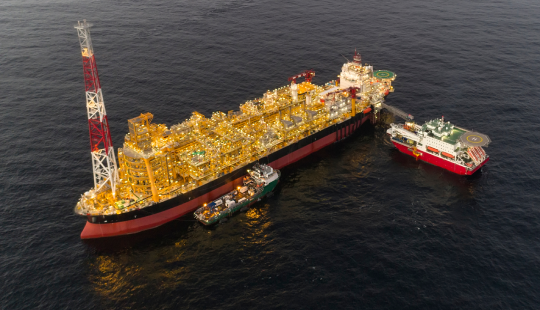
Tankers are ships designed to transport liquids in bulk.  There are different types of tankers like oil tankers, chemical tankers, and liquefied natural gas carriers

Tanker structure

Modern ocean going tankers have at least two longitudinal bulkheads, providing three athwart ship tanks, and the machinery is arranged aft.

Modern tanks have two broad categories, product carriers that tend to be smaller between 15,000 to 30,000 tonnes deadweight range. Crude oil carriers go up to 5, 00,000 DWT. Older tankers were all single deck vessels, having no double bottom in a way of cargo spaces, a tank top however provides greater safety, easier cleaning with the bottom shell stiffening inside the double bottom, and the access to the cargo piping arrangements.

A feature of modern tankers is the use of some wing tanks as clean water ballast spaces. This may permit reduced scantlings where lower longitudinal bending moments result from ballast arrangements adopted. Spaces appropriated for water ballast only are less subject to corrosion than those used by both for oil cargoes and water ballast. There are certain types of tankers where the wing tanks are wholly appropriated for water ballast. Only the centre tanks which are somewhat wider than those on conventional tankers are used for carrying oil, the biggest advantage is safety in the event of a collision.

Construction in Tank Spaces

Ocean going tankers have longitudinally framed bottom shell and deck through the tank spaces. The side may however be either longitudinally framed or transversely framed and the longitudinal bulkheads longitudinally or vertically stiffened in other than very large tankers. Lloyds register requires full longitudinal framing once the vessels length exceeds 200m.

Transverse Side Framing

When transverse framing is adopted in smaller and medium size tankers the frames are supported by horizontal stringers and the number of stringers depends on the depth of the ship. At the ends of the side frames bracket connections are made, the lower bracket covering the round of the bilge  and extending to the adjacent bottom longitudinal clear of the transverse. At the upper end the bracket connections is to the under side of the deck clear of the transverse, and bracket connections are also arranges at the stringers.

Longitudinal Framing

Deck and bottom longitudinal have the greatest scantlings since they are stiffening the highly stressed flanges of the hull girder. At the side shell the upper longitudinal have the least scantlings and a uniform increase in size occurs down the side shell, until the bilge is reached. The bilge longitudinal size then approaches that of the bottom shell. An important feature of the longitudinal framing is that continuity of strength is maintained, particularly at the bulkheads forming the ends of the tanks. This feature is increasingly important as the ship length is extended, the bottom and deck longitudinal being continuous through the bulkhead where ship length is the excessive, unless an alternative arrangement is permitted by the classification society.

Bottom, Side And Deck Transverse

To support the longitudinal framing at the deck and bottom shell, transverse webs are fitted at regular intervals. Similarly where the side shell is longitudinally framed a vertical transverse web is arranged at the shell. Between the transverse bulkheads the transverse webs maybe evenly spaced at the intervals of 3m on smaller vessel to 5m on larger vessels.

Cross Ties

Horizontal cross ties are introduced in the wing tanks to connect webs at the ship side and the longitudinal bulkhead where these are longitudinally framed. The cross ties are designed to stiffen the tank side boundary bulkhead structure against transverse distortion under liquid pressure.
Two or three horizontal cross ties are provided depending on the vessels depth, but diagonal crossties may be fitted and will be found on a number of ships. The crosstie is often simply a face plate, vertically stiffened if very deep and horizontally stiffened to prevent buckling and distortion in that direction. At its end the cross ties is racketed to the vertical transverse webs.

Bottom and Deck Girders

Stiffening arrangements at the bottom shell require that the transverse in the centre tank should be associated with a continuous or inter coastal centre line girder.

Related Topics
Aries Marine
Valid XHTML 1.0 Transitional Privacy Policy Terms of use | Site Map © 2009 Aries Marine All Rights Reserved Site designed by Aries Network Pte Ltd